 Live Chat Software

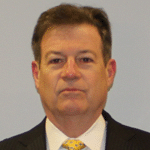
Glenn Pomerantz
|
|
Glenn Pomerantz, MD, JD
Senior Vice President, Health Services Gateway Health Plan |
As the Senior Vice President of Health Services at Gateway Health, Dr. Pomerantz provides transformational leadership to teams impacting the most critical elements of care delivery to Gateway’s 340,000 Medicare and Medicaid members while managing $2.4B in medical cost. Serving as a physician and member advocate, he provides strategic direction and leadership over key clinical and operational areas including Network Management and Provider Relations, Care Management, Clinical Innovation, Pharmacy, Quality/Stars and Risk Adjustment.
Dr. Pomerantz has collected nearly 30 years of experience in healthcare, serving as a pioneer of value-based reimbursement and population health holding leadership positions.
Originally from Massachusetts, Dr. Pomerantz graduated from the University of Miami Miller School of Medicine, the Boston University School of Law, and completed his residency at Faulkner Hospital in Boston. He is also a board-certified internist. He and his wife, Pamela, enjoy traveling to England.
Gain insight into what HHS is pursuing across health care to empower patients and providers, deliver better health outcomes, and protect and enhance the health and well-being of the American people.

Chief of Staff to the Deputy and Senior Advisor to the Secretary
Department of Health and Human Services
Will Brady
|
|
Will Brady
Chief of Staff to the Deputy and Senior Advisor to the Secretary Department of Health and Human Services |
Will Brady is Chief of Staff to the Deputy Secretary and Senior Advisor to the Secretary at the Department of Health and Human Services. As Chief of Staff to the Deputy Secretary, he advises on policy and program matters and assists the Deputy Secretary in the management and operations of the department. In addition, he is responsible for strategic policy initiatives focused on innovation, deregulation, and healthcare financing. In his Senior Advisor capacity, Will works with the Secretary and Deputy Secretary to develop and implement policies that improve Health IT and advance HHS’s technology, administrative and financial priorities. Prior to HHS, Will was legal counsel for a large health insurer and focused on federal healthcare law, insurance law, and corporate transactions. Will also has experience as an entrepreneur founding a software company that provided mobile ordering and fundraising platforms.
Will has a law degree from DePaul University and studied accounting and finance at the University of Dayton. Will is also a Captain in the DC Army National Guard and lives in Virginia with his wife and two children.
Effective interventions that address social determinants of health must be developed through collaboration, scalable to extend reach and improve efficiency, and built with a strategy for sustainable funding. Discuss Medicaid as an innovator, and how plans, providers, states, and community organizations must be working in sync to effectively improve overall health and well-being of members.
- Review the types of innovative programs, models, and collaborations that are being rewarded with investment
- Overcome barriers to building a nonmedical benefit supplier network, and the challenges to scale operations
- Enhance collaboration between stakeholders by developing shared goals and aligning incentives

Manik Bhat
|
|
Manik Bhat
Chief Executive Officer Healthify |
Manik Bhat is the CEO of Healthify, a New York-based startup that provides leading solutions to address the social determinants of health at scale. Manik co-founded Healthify in 2013 while working as a community health worker in East Baltimore clinics. He saw how social needs - like access to food and housing - dramatically impacted health outcomes in the community and was moved to create Healthify. Since Healthify’s founding, Manik has become an avid speaker and advocate for addressing the social determinants of health through equitable and collaborative partnerships between healthcare and social service organizations.
Speaking at these upcoming events:
- The 17th Annual World Health Care Congress
April 11 - 14, 2021 • Washington, DC
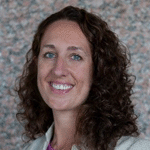
Caraline Coats
|
|
Caraline Coats
Vice President, Bold Goal and Population Health Strategy Humana |
Caraline Coats is Vice President of Humana’s Bold Goal and Population Health Strategy, leading Humana’s mission to help improve the health of the communities it serves by making it easier for people to achieve their best health.
Coats has been with Humana for over twelve years. She started as a Regional Director of Medicare Operations in Arizona and relocated to Florida, where she became the Vice President of Network Management and subsequently, the Regional Vice President of Network Management for the East Region. In her role before joining the Bold Goal team, Coats served as Vice President of Humana’s Value-Based Strategies, leading the organizational advancement of innovative payment models that enable Humana to support providers as population health managers in value-based care relationships.
Prior to Humana, Caraline was Vice President of Operations with a hospitalist company and Assistant Vice President of Managed Care for IASIS Healthcare in the Arizona and Nevada regions. She credits her understanding and experience working directly with physicians and hospitals for the opportunities she has had with Humana.
Caraline holds an undergraduate degree in biology and a Masters in Health Services Administration from the University of Michigan. She and her husband have two sons, Michael (5 years old) and Nicholas (4 years old). Outside of Humana, Caraline spends her time with family and enjoys running.
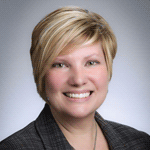
Karin VanZant
|
|
Karin VanZant
Vice President, Integrated Community Partnerships CareSource |
Karin VanZant is the Vice President of Integrated Community Partnerships at CareSource. Since 2015, Mrs. VanZant oversees the work of Social Determinants of Health at CareSource and the full integration into the Population Health Model. Specifically, Mrs. VanZant has built the JobConnect Program - a workforce development program that assists CareSource members to enter into full-time, permanent employment. In 2015, JobConnect started in Ohio and has expanded to Indiana and Georgia as of 2017. Karin is currently working on food access and food insecurity pilots; in addition to establishing housing partnerships as a part of the SDOH integration into Population Health.
Prior to joining CareSource, Karin was the co-founder and Executive Director of Think Tank, Inc. For ten years as this organization’s leader, Karin assisted the team to live out the mission of equipping and facilitating collaboration among people and organizations seeking ways to promote greater connectedness and a more thriving community.
Karin VanZant has a MPA in Public Administration (2008) and a BA in Social Work (1998) from Wright State University. Karin is certified in various curriculums that address comprehensive poverty issues in the United States. She has helped author presentations and curriculum for use within nonprofit, business and faith based organizations seeking to become relevant and holistic in their approach to poverty alleviation. Mrs. VanZant is an Adjunct Professor at Antioch Midwest University and Wright State University on a variety of subjects including US Hunger and Poverty, Introduction to Human Services, Grant Writing, Leading Change, Coaching as Management, Holistic Case Management and Emotional Intelligence. She lives in Springfield, Ohio with her husband and her son.
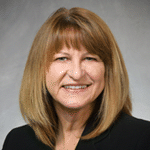
Lynda Zeller
|
|
Lynda Zeller
Senior Fellow and Program Officer, Behavioral Health Michigan Health Endowment Fund |
Lynda is the Senior Fellow, Behavioral Health for the Michigan Health Endowment Fund. The mission of the fund is to improve the health of Michigan residents, with special emphasis on health and wellness of children and seniors while reducing the cost of care. Her work is focused specifically on cross cutting goals of strengthening the workforce in behavioral health systems and seamless integration of services including social determinants of health and wellness.
Previously, she served seven years as the deputy director for the Behavioral Health and Developmental Disabilities at the Michigan Department of Health and Human Services. In this position, Lynda functioned as the State Authority for all community based mental health, substance use disorder, intellectual and developmental disabilities policy and services; including all publicly funded treatment, prevention and supports; and was responsible for the five state psychiatric and forensic hospitals For the three years prior, she served as the Health Services Administrator for the Michigan Department of Corrections, overseeing provision of all health, behavioral heath and dental services for the state’s prison system. Immediately prior to Michigan Department of Corrections, Lynda was the Chief Executive Officer for the Kent Health Plan, a safety net health coverage plan in Michigan.
In total, Lynda has more than 30 years of service in fields of indigent health care, developmental disabilities support and services, community behavioral health, and managed care. Her job responsibilities across those years are wide-ranging and include direct care residential, case management, information technology, quality, government relations strategy and more. Lynda’s most recent national board experience includes: National Association for State Mental Health Program Directors (immediate past president), The Council of State Governments Justice Center, and the National Research Institute (current Vice President). Lynda is also a sister of persons receiving services in intellectual/developmental disabilities and behavioral health service systems. She counts her siblings as sources of important strength, encouragement and learning throughout her life’s work.
In a value-based world, delivering quality, cost-efficient care relies on provider buy-in, accuracy of data and reporting, and accountability across stakeholders from the state to local level to deliver value while managing costs. Hear what states are looking for in terms of quality in managed care, the type of measures that are being reported, and what all stakeholders need to be doing to support the quality mission.
- Understand how different states work with provider networks to bring them on board and integrate services
- See how alignment of quality measures can leverage practices to work with payers to improve quality
- Discuss rate setting methods and payment models that align with quality of care
- Learn what tools are being used to collect and aggregate data at the local level
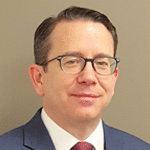
Jonathan Barley
|
|
Jonathan Barley, PhD
Bureau Chief, Health Innovation and Quality Ohio Department of Medicaid |
Jon Barley, Ph.D., is the Chief of the Bureau of Health Research and Quality (BHRQ) for Ohio Medicaid. The bureau uses quality improvement science to improve health care through the promotion of evidence-based practices and care innovations. Prior to this position, Dr. Barley worked within Medicaid as the Chief of the Bureau of Managed Health Care where he administered full-risk managed care programs for the Covered Families and Children and the Aged, Blind, and Disabled populations. He has a background in health research and earned his BS and PhD from The Ohio State University.

Senior Vice President, Medical Excellence and Clinical Solutions
AmeriHealth Caritas
Parul Mistry
|
|
Parul Mistry, MD, MA
Senior Vice President, Medical Excellence and Clinical Solutions AmeriHealth Caritas |
Parul Mistry is the Senior Vice President for the Medical Excellence and Clinical Solutions division of AmeriHealth Caritas.
Dr. Mistry is responsible for AmeriHealth Caritas’ quality programs, NCQA (National Committee for Quality Assurance) Accreditation, delegation oversight and evaluation as well as implementation of clinical solutions that assist in the delivery of efficient care to our members. The success of the programs is essentially reflected within our NCQA Accreditation Scores (Standards, CAHPS, HEDIS). We rely on our HEDIS measures as a consistent way to evaluate the quality of care our members receive. These measures:
- Allow us to identify and acknowledge areas of excellence and also create opportunities for improvements to generate better health outcomes.
- Enable us to evaluate care and service performance to help keep our members healthy.
- Are a requirement of our state customers and key selection criteria in requests for proposals.
- Can be used in member auto-assignment algorithms.
Prior to this role she was the Chief Medical Officer for AmeriHealth Caritas Region II, which included AmeriHealth Caritas District of Columbia, AmeriHealth Caritas of Iowa, AmeriHealth Caritas Northeast, AmeriHealth Caritas Pennsylvania and Keystone First. She was responsible for the successful implementation and effectiveness of AmeriHealth Caritas’ Integrated Care Management program and all other medical management activities in the region, overall performance for the region and leading regional efforts to partner with physicians in providing patients with access to quality, cost-effective health care.
Prior to joining AmeriHealth Caritas Dr. Mistry served in various strategic roles including Chief Medical Information Officer and Chief Clinical Officer, Northeast Region, at Corizon Health in New Jersey, and Senior Vice President of Clinical Operations at Optum/Executive Health Resources.
Dr. Mistry completed her medical school through the University of Bombay, Mumbai, India. She did her internal medicine training at Abington Memorial Hospital in PA and earned her Master’s Degree in Bioethics from Case Western Reserve University in Cleveland.
Moderator:
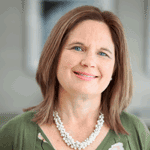
Eva Powell
|
|
Eva Powell, MSW
Associate Director, Clinical Innovation Alliance of Community Health Plans (ACHP) |
As the Associate Director of Clinical Innovation, Eva oversees ACHP’s clinical performance improvement strategy and supporting collective innovation by ACHP member plans on care delivery and payment. A central component of her role is to build and execute ACHP’s research agenda. She serves as a liaison to various quality measurement organizations and contributes to a variety of multi-stakeholder working groups focused on social determinants of health and on eliminating low-value care.
Prior to joining ACHP, Eva was an independent consultant working on projects related to community health, advanced payment models and enhanced use of technology to support patient engagement. She previously worked as Senior Director of Quality and Innovation at Evolent Health and led consumer focused Health IT advocacy for the National Partnership for Women & Families.
With the wide diversity of Medicaid programs and populations, each state has different measures of value. From waivers that span block grants, to expansion, to work requirements, there is much to learn about what is actually making a positive impact on beneficiaries. Learn how states are defining value and hear what types of programs are prime to evolve and be translated to other states and populations.
- Gain insight into what states are looking for from their MCOs and how they are using data to measure quality and outcomes and tying that to value
- Discuss how infrastructure may be changing to improve efficiencies and provide more services
- Hear how Medicaid programs look at innovation and new service delivery approaches
- Consider what we can learn from expansion states and what they are doing to make a positive impact on beneficiaries

Elizabeth Hinton
|
|
Elizabeth Hinton
Senior Policy Analyst Kaiser Family Foundation |
Elizabeth Hinton is a Senior Policy Analyst with the Kaiser Family Foundation’s Program on Medicaid and the Uninsured, where she focuses primarily on Medicaid delivery system and payment reform issues and tracking Section 1115 Medicaid waiver activity. Prior to joining the Foundation, Ms. Hinton served as a Research Project Coordinator at the U.S. Department of Veterans Affairs Center for Health Services Research and Development in Primary Care. During graduate school, Ms. Hinton served as a Research Analyst at the North Carolina Institute of Medicine. Prior to returning to graduate school, Ms. Hinton was a Senior Associate at ICF International, where she worked on a wide range of projects to assist federal clients on issues involving affordable housing and homelessness. Ms. Hinton received her B.A. from James Madison University and holds a Master of Science in Public Health from the University of North Carolina-Chapel Hill.
Former Director, Disabled and Elderly Health Programs Group
Center for Medicaid and CHIP Services, Centers for Medicare and Medicaid Services (CMS)
Strategic Advisor, Medicaid Health Policy and Long Term Services and Supports

Dave Richard
|
|
Dave Richard
Deputy Secretary, Division of Health Benefits North Carolina Medicaid |
Dave Richard is the Deputy Secretary, NC Medicaid, where he leads North Carolina’s $14 billion Medicaid and NC Health Choice programs for the state’s Department of Health and Human Services (DHHS).
Richard’s vision for Medicaid is to ensure a sustainable, personcentered and innovative Medicaid program for more than two million North Carolinians who use Medicaid. As the programs undergo transformation to even better fit the needs of state and its residents, he is committed to the fundamental goal of improving the health and well-being of all residents. Richard believes the right way to achieve success is to work closely with stakeholders in all aspects of Medicaid.
Prior to leading Medicaid, Richard was the Deputy Secretary for DHHS Behavioral Health and Developmental Disability Services and the State Operated Healthcare Facilities divisions. He joined DHHS in May 2013 as the Director of the Division of Mental Health, Intellectual and Developmental Disabilities and Substance Abuse Services. Richard joined DHHS after leading The Arc of North Carolina, an advocacy and service organization for people with intellectual and developmental disabilities, as its Executive Director for 24 years.
Richard has a bachelor’s degree in education from Louisiana State University.
Speaking at these upcoming events:
- The 17th Annual World Health Care Congress
April 11 - 14, 2021 • Washington, DC
Medicaid plans know that having conversations with high-risk and high-need members as much as possible is a cornerstone of effective managed care. But there are limits to how many members care managers, case workers, and member service staff can effectively engage, so their focus will always be on the members that need them the most. But what happens when a plan scales that conversational approach to the entire population, leveraging text messaging and automation to connect unengaged members with services and support? Learn how Trusted Health Plan deployed an innovative texting strategy and used lessons learned and a focus on innovation to improve the solution over time.
- Hear what makes text and conversational AI so successful with Medicaid populations
- Discuss actionable solutions to help members take control of their care to improve redetermination rates and close gaps in care
- Assess the impact of text messaging interventions on population health, and how they can help drive the connection of members to appropriate services
Having systems that talk to each other is a critical step in using Medicaid data and public health information to improve care. Hear what we are getting out of our systems and where improvements can be made, especially with regard to opioid management, prescription drug monitoring programs, state immunization registries, and more.
- Discuss how states and plans are working together to integrate data on enrollment, outcomes, and value
- Utilize data to build better outreach and engagement opportunities, and more effectively use resources
- Assess how AI and analytics can be used to predict risk and impact decisions around policy and practice
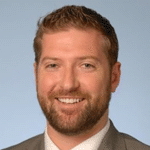
Chief Data Officer, Division of Strategy and Technology
Indiana Family and Social Services Administration
Connor Norwood
|
|
Connor Norwood, PhD, MHA
Chief Data Officer, Division of Strategy and Technology Indiana Family and Social Services Administration |
Dr. Connor Norwood is the Chief Data Officer for the Indiana Family and Social Services Administration (FSSA), which administers the state’s Medicaid and social service programs. He oversees the agency’s enterprise data warehouse (EDW), which houses the data required to support the reporting, business intelligence, and advanced analytics for Indiana’s health and human services programs. Norwood’s vision is to apply enterprise-wide governance, build a culture of inquiry, and utilize data as an asset to inform policy decisions that have the power to impact population health and improve the lives of the people served by the State of Indiana. He also holds an adjunct faculty appointment at Indiana University Richard M. Fairbanks School of Public health and teaches in the Healthcare Innovation Leadership Institute.
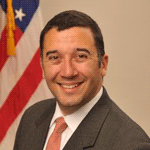
Medicaid Interoperability Lead, Office of Policy
Office of the National Coordinator for Health IT
Thomas Novak
|
|
Thomas Novak
Medicaid Interoperability Lead, Office of Policy Office of the National Coordinator for Health IT |
Thomas is the Medicaid Interoperability lead in the Office of Policy at the Office of the National Coordinator for Health IT where he supports the advancement of Medicaid interoperability in the drafting and review of Federal regulations. He is detailed part time to the Centers for Medicare and Medicaid Services – Medicaid Data and Systems Group – where he provides direct support to state Medicaid agencies and state governments on Health Information Exchange funding and strategy.
The best health care is local, and the best local models of care can become national initiatives. Learn how community-based organizations can help build active community engagement, trust, and visibility.
- Discuss how community organizations are helping health plans meet their objectives
- Assess how embedded aging and disability resource specialists can help integrate social services and traditional health care
- Share what it means to be a good partner and how to best align goals with local government
Moderator:

Mohit M. Ghose
|
|
Mohit M. Ghose
Vice President, Government Relations Beacon Health Options |
Mohit Ghose is a health care executive and healthcare policy expert with 20 years of experience working with business leaders to anticipate, respond to, and influence the changing health care landscape. He has managed a wide range of contracting, planning and implementation, advocacy and policy programs designed to improve results and position a company for success in an ever-evolving marketplace.
Mohit currently serves as vice president of government relations for Beacon Health Options (Beacon). In this role, Mohit focuses on the western states and is accountable for organizing, developing and leading government relations strategies and policy initiatives in support of the company’s strategic plan and business development goals. Mohit serves as an advocate for Beacon positions on policy and program design with senior legislative and executive branch officials across the West. In his role, Mohit works to promote awareness of Beacon’s brand, its mission and though leadership, and its capabilities in delivering high-quality behavioral healthcare services to government and private payers.
Prior to this role, Mohit was on the senior leadership team of Molina Healthcare of California as vice president of government contracts, policy & strategic initiatives where he led the government contracts team, served as the plan’s primary point of contact with regulatory agencies while also directing the company’s policy team covering legislative, public policy and regulatory challenges and opportunities. The strategic initiatives department under his direction was responsible for implementation of new initiatives and projects impacting all business units, including Molina’s annual operating plan.
Earlier in his career, Mohit was vice president of public affairs for Aetna, Inc. and led Aetna’s internal and external efforts for policy advocacy and communications through health care reform and its implementation.
Mohit started his career in health care policy and advocacy in Washington, DC at America’s Health Insurance Plans (AHIP). As senior vice president of public affairs, Mohit managed all aspects of media and crisis communications and served as national spokesman on industry issues over several years of legislative and policy campaigns, including the landmark Medicare prescription drug law, the genetic non-discrimination law and the mental health parity law of 2008.
Panelists:
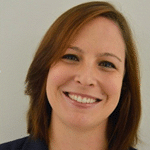
Shannon Cosgrove
|
|
Shannon Cosgrove, MHA
Director, Community Health Blue Shield of California |
Shannon Cosgrove is the Director of Community Health for Blue Shield of California. In this newly created role, she oversees innovative pilots and initiatives related to Community Health Advocates, Behavioral Health, Social Determinants, technology platforms and health equity. By 2020, her team will invest over $6m to improve the health of communities where members reside by finding ways to support existing efforts linking physical, mental and social health for all.
Previously, Shannon was the Director of Health Policy for Cure Violence where she led the national Movement towards Violence as a Health Issue. She has consulted with the Robert Wood Johnson Foundation’s Culture of Health Leaders and was a Master Trainer for CommonHealth ACTION’s Equity, Diversity and Inclusion Institute.
Shannon served as the Deputy Director for the Mayor’s Office on Criminal Justice in Baltimore City. Her past roles include: Health Equity Manager on the Healthier Communities Team at YMCA of the USA, Project Officer at the Centers for Disease Control and Prevention’s Racial and Ethnic Approaches to Community Health team and Health Disparities Coordinator at the Baltimore City Health Department through the Centers for Disease Control and Prevention's Public Health Prevention Fellowship Program where she also served as the Chair of the Health Equity and Social Justice Committee
While receiving her MHA and BSc in Health Policy and Administration from the Pennsylvania State University, Shannon served as a peer behavioral interventionist and as the grant coordinator at the Centre for Volunteers in Medicine. Ms. Cosgrove resides in Oakland where she teaches spin class and serves on the advocacy board for YouthAlive!.

State Integration Unit Manager, Aging and Long Term Support Administration
Washington State Department of Social and Health Services
Kelli Emans
|
|
Kelli Emans
State Integration Unit Manager, Aging and Long Term Support Administration Washington State Department of Social and Health Services |
Kelli Emans is the Integration Manager for the Home and Community Services Division within the Aging and Long-Term Support Administration (ALTSA). ALTSA administers long-term services and supports to low income seniors and individuals with disabilities. As of 2017, Washington’s system is ranked 1st in the nation for its home and community-based service options, according to AARP. ALTSA serves more than 64,000 people with Medicaid services each year and supports many more Washingtonians with additional services and supports.
With more than a decade of experience working in Medicaid. Prior to joining ALTSA, Kelli worked for Washington’s Health Care Authority. Currently, Kelli is responsible for a broad range of policy development activities related to state-purchased health care programs, engaging in and analyzing policy decisions for ALTSA. This includes staying involved in the ever-evolving world of federal and state initiatives that impact managed care service delivery and the integration of long-term services and supports into managed care purchasing strategies.

David Kelly
|
|
David Kelly
Executive Director Area Agency on Aging & Disabilities of Southwest Washington |
David Kelly is employed as Executive Director of the Area Agency on Aging and Disabilities of Southwest Washington (AAADSW). AAADSW’s 160+ employees have a mission to promote independence, choice, well-being and dignity for persons aged 60 and over, adults with disabilities and their family caregivers through a comprehensive, coordinated system of home and community-based services. Post obtaining a Masters degree in Public Administration from BYU, David’s work career has included serving in various management positions in the public and private sectors.
From his personal life David is married to Jessica Kelly, and together they have raised 5 sons and now are the grandparents of 6. David has lived in Vancouver, Washington for more than 35 years. A native of Portland Oregon, David enjoys tennis, golf, reading and being an active volunteer in various community endeavors.
Behavioral Health integration has been rolled out and managed differently in programs across the country, with states slowly moving to have services and financing under one model. Hear how states and plans must prepare for more complex behavioral health challenges and move from shared savings to shared risks.
- Explore the strategies for transferring people, programs, and contracts into managed care
- Assess how states and plans are partnering to co-manage risk
- Discuss solutions to overcome access barriers, including challenges with reimbursement, policy, and understanding provider needs
- Outline strategies for increasing engagement through alternative workers and focused teams
Mohit M. Ghose
|
|
Mohit M. Ghose
Vice President, Government Relations Beacon Health Options |
Mohit Ghose is a health care executive and healthcare policy expert with 20 years of experience working with business leaders to anticipate, respond to, and influence the changing health care landscape. He has managed a wide range of contracting, planning and implementation, advocacy and policy programs designed to improve results and position a company for success in an ever-evolving marketplace.
Mohit currently serves as vice president of government relations for Beacon Health Options (Beacon). In this role, Mohit focuses on the western states and is accountable for organizing, developing and leading government relations strategies and policy initiatives in support of the company’s strategic plan and business development goals. Mohit serves as an advocate for Beacon positions on policy and program design with senior legislative and executive branch officials across the West. In his role, Mohit works to promote awareness of Beacon’s brand, its mission and though leadership, and its capabilities in delivering high-quality behavioral healthcare services to government and private payers.
Prior to this role, Mohit was on the senior leadership team of Molina Healthcare of California as vice president of government contracts, policy & strategic initiatives where he led the government contracts team, served as the plan’s primary point of contact with regulatory agencies while also directing the company’s policy team covering legislative, public policy and regulatory challenges and opportunities. The strategic initiatives department under his direction was responsible for implementation of new initiatives and projects impacting all business units, including Molina’s annual operating plan.
Earlier in his career, Mohit was vice president of public affairs for Aetna, Inc. and led Aetna’s internal and external efforts for policy advocacy and communications through health care reform and its implementation.
Mohit started his career in health care policy and advocacy in Washington, DC at America’s Health Insurance Plans (AHIP). As senior vice president of public affairs, Mohit managed all aspects of media and crisis communications and served as national spokesman on industry issues over several years of legislative and policy campaigns, including the landmark Medicare prescription drug law, the genetic non-discrimination law and the mental health parity law of 2008.

Gary Weiskopf
|
|
Gary Weiskopf
Associate Commissioner for Managed Care New York State Office of Mental Health |
Gary Weiskopf is the Associate Commissioner for Managed Care for the NYS Office of Mental Health. In this capacity he oversees the development and implementation of behavioral health Medicaid managed care.
Previously, Mr. Weiskopf was the Director of Weiskopf Consulting Services - a public policy consulting company - and an adjunct professor at Columbia University's School of International and Public Affairs.
Mr. Weiskopf has also served as Executive Director of the NYS Conference of Local Mental Hygiene Directors. As Executive Director, Mr. Weiskopf worked with counties, state agencies, the legislature, professional groups, and advocacy organizations to achieve policies, laws, regulation, and funding necessary to ensure effective systems of care for mental health, alcohol and substance abuse, mental retardation and developmental disabilities.
Prior to working for the Conference, Mr. Weiskopf served as Acting Director of SUNY's Nelson A. Rockefeller Institute of Government, Center for New York State and Local Government Studies.
Mr. Weiskopf has over 25 of years of public policy analysis and management experience. He has a Masters Degree in Public Administration from Columbia University (1987) and a B.A. from SUNY Albany (1985).